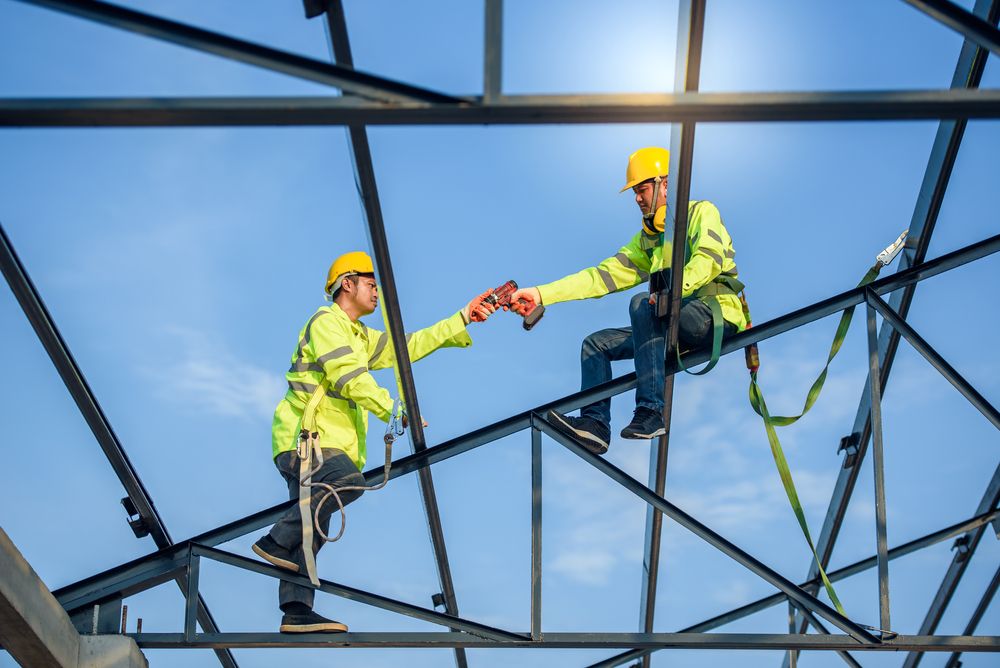
Safety when working at heights is of paramount importance to prevent accidents and protect the well-being of employees. Working at heights can include tasks such as construction, maintenance, or repair work on elevated surfaces, platforms, or structures. Here are essential guidelines for ensuring safety when working at heights:
Conduct a comprehensive risk assessment to identify potential fall hazards and assess the specific risks associated with the task.
Fall Protection Planning:
Develop a fall protection plan that outlines the measures to be taken to prevent falls. This plan should include engineering controls, administrative controls, and the use of personal protective equipment (PPE).
Guardrails and Barriers:
Install guardrails, safety nets, or barriers around open edges, platforms, or roofs to prevent falls.
Ensure these protective measures meet regulatory standards.
Fall Arrest Systems:
When guardrails and barriers are not feasible, use fall arrest systems such as safety harnesses, lifelines, and anchors.
Provide proper training on how to use and inspect fall arrest equipment.
Ladder Safety:
Ensure that ladders are in good condition, set on stable surfaces, and used for their intended purpose.
Prohibit the use of chairs, boxes, or other makeshift platforms as substitutes for ladders.
Scaffolding Safety:
Inspect scaffolding regularly to confirm its integrity and safety.
Ensure employees are trained on scaffold assembly, use, and fall protection.
Elevated Work Platforms:
Train operators on the safe use of aerial lifts, scissor lifts, and other elevated work platforms.
Conduct pre-use inspections and follow manufacturer guidelines.
Fall Hazard Awareness Training:
Provide comprehensive training to employees on the risks of working at heights and how to identify fall hazards.
Emphasize the importance of situational awareness.
Edge Warning Systems:
Use edge warning systems, such as flags or signs, to alert workers to the presence of unprotected edges.
Tool and Material Management:
Secure tools and materials to prevent them from falling.
Use tool lanyards and tool bags to keep tools tethered to workers when working at heights.
Weather Considerations:
Assess weather conditions before working at heights. High winds, rain, or icy conditions can increase fall risks.
Have protocols for suspending work during adverse weather.
Emergency Response:
Develop and communicate clear emergency procedures for fall incidents, including rescue plans.
Ensure that employees know how to use fall arrest equipment for self-rescue or how to assist fallen workers.
Safe Access and Egress:
Provide safe access and egress to elevated work areas using stairs, ramps, or ladder cages.
Ensure that these access points are well-maintained and secure.
Documentation:
Maintain records of safety inspections, training, equipment inspections, and fall protection plans.
Regulatory Compliance:
Stay informed about and comply with relevant safety regulations and standards governing work at heights in your industry.
Safety Culture:
Foster a safety culture where employees prioritize safety and actively participate in safety programs.
Supervision and Reporting:
Supervisors should actively monitor work at heights and ensure compliance with safety procedures.
Encourage employees to report unsafe conditions or near misses promptly.
By adhering to these guidelines and promoting a strong safety culture, you can significantly reduce the risk of accidents and injuries associated with working at heights and ensure the safety of your employees.