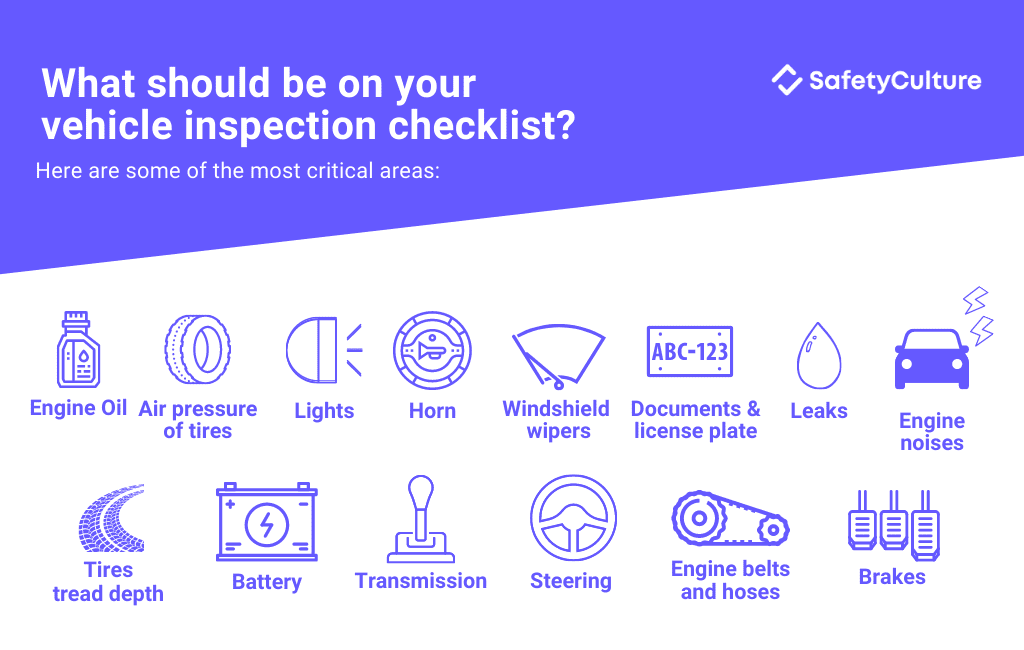
Vehicle Inspection: Conduct regular vehicle inspections to ensure they are in safe working condition. Check for signs of wear, damage, or mechanical issues.
Maintenance Schedule: Implement a maintenance schedule for all workplace vehicles. This should include routine servicing, oil changes, brake checks, and tire inspections.
Documentation: Maintain records of vehicle inspections and maintenance activities. This documentation is crucial for tracking vehicle safety and compliance.
Driver Training: Provide comprehensive training for vehicle operators. Ensure they are familiar with the vehicle’s controls, safety features, and safe operating procedures.
Licensing and Certification: Verify that all vehicle operators hold the necessary licenses and certifications to operate specific types of vehicles, such as forklifts or commercial trucks.
Seatbelts: Ensure that all vehicles are equipped with functional seatbelts, and enforce a strict policy of seatbelt use by all occupants.
Visibility: Check and maintain visibility aids such as mirrors and backup cameras to eliminate blind spots.
Safe Speed: Enforce speed limits within the workplace and provide clear signage indicating speed limits in different areas.
Load Securement: Train employees in proper load securement techniques to prevent shifting or falling loads during transport.
Traffic Management: Implement clear traffic flow plans and one-way traffic routes where necessary. Use signage and markings to indicate the right of way and pedestrian crossings.
Pedestrian Safety: Separate vehicle traffic from pedestrian areas where possible. Educate employees on the importance of staying clear of moving vehicles and following designated walkways.
Parking Areas: Designate specific parking areas for vehicles and enforce parking rules to prevent congestion and ensure emergency access.
Hazardous Materials: If your workplace handles hazardous materials, follow strict protocols for their transportation, storage, and disposal.
Emergency Equipment: Equip vehicles with emergency kits, including fire extinguishers, first aid supplies, and emergency contact information.
Proximity Alarms: Install proximity alarms on vehicles, especially in areas with limited visibility, to alert pedestrians and other workers to the vehicle’s presence.
Backup Alarms: Ensure that vehicles with reverse gear emit a loud, audible alarm when backing up.
Anti-Slip Measures: Use anti-slip materials or coatings on vehicle steps and entry points to prevent slips and falls.
Cell Phone Policy: Enforce a strict no-cell-phone-use policy for drivers while operating vehicles.
Weather Conditions: Train drivers to adapt their driving style to different weather conditions, such as rain, snow, or ice.
Regular Audits: Conduct regular safety audits and assessments of vehicle operations to identify and address potential hazards or issues.
Emergency Response: Develop and communicate clear procedures for responding to accidents or incidents involving workplace vehicles.
Safety Culture: Foster a culture of safety, where employees understand the importance of vehicle safety and actively participate in safety programs.
Regulatory Compliance: Stay informed about and adhere to relevant safety regulations and standards related to workplace vehicles.
By consistently implementing and monitoring these vehicle safety practices, you can significantly reduce the risk of accidents and injuries in the workplace and ensure the safety of your employees and property.